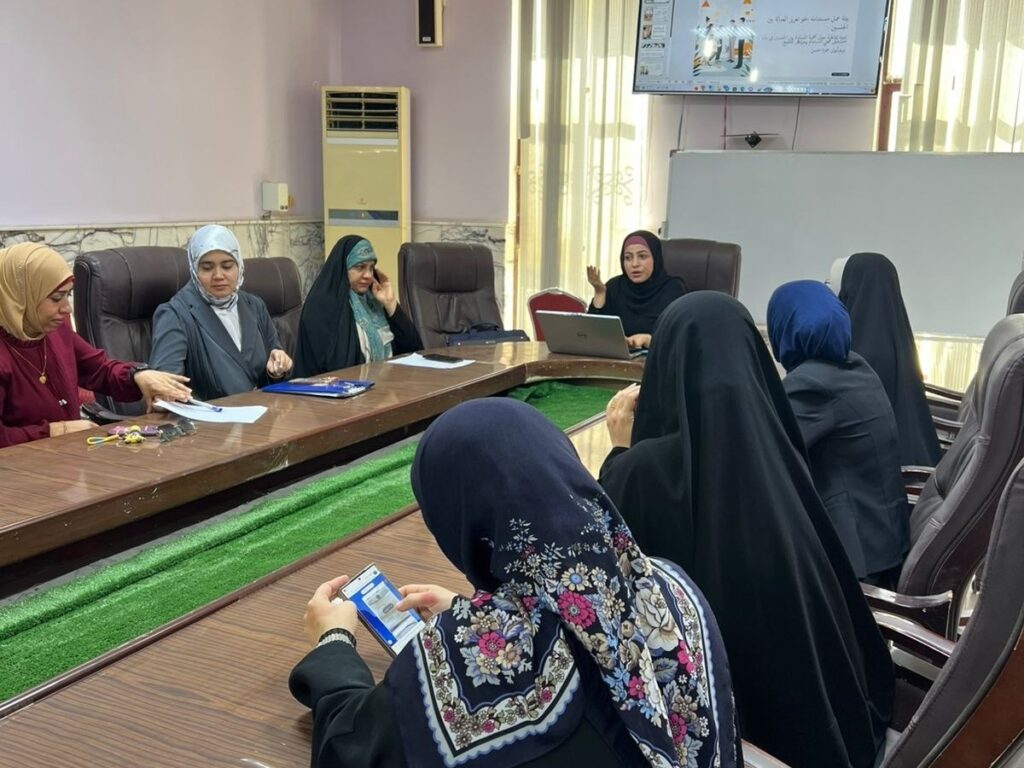
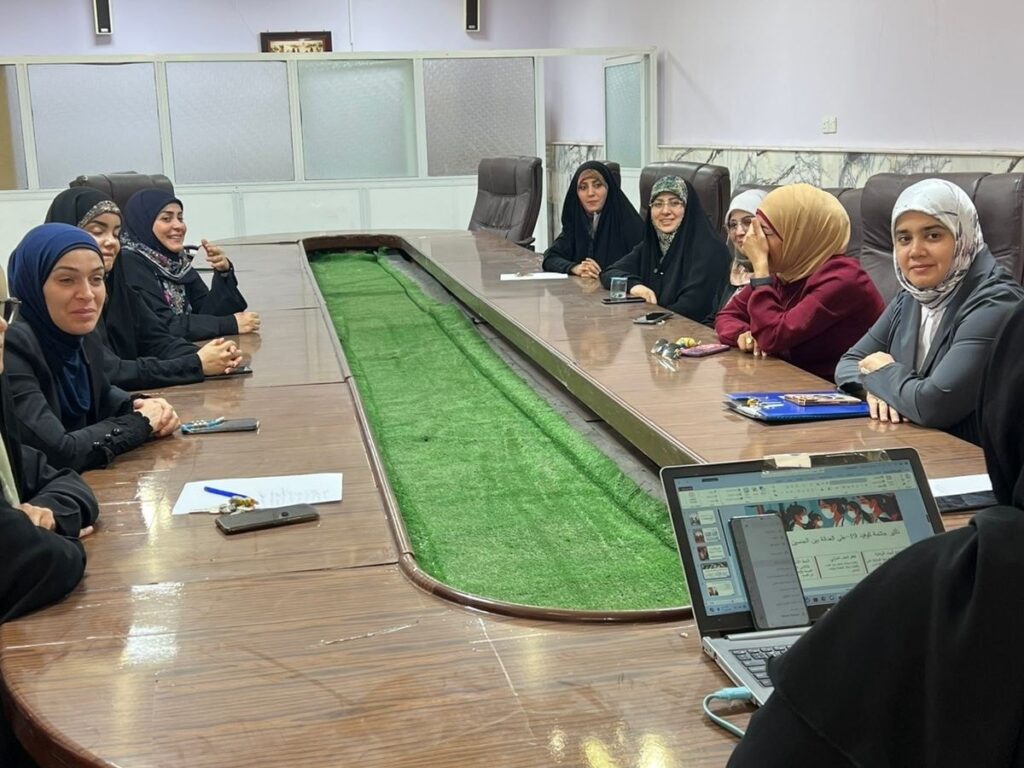
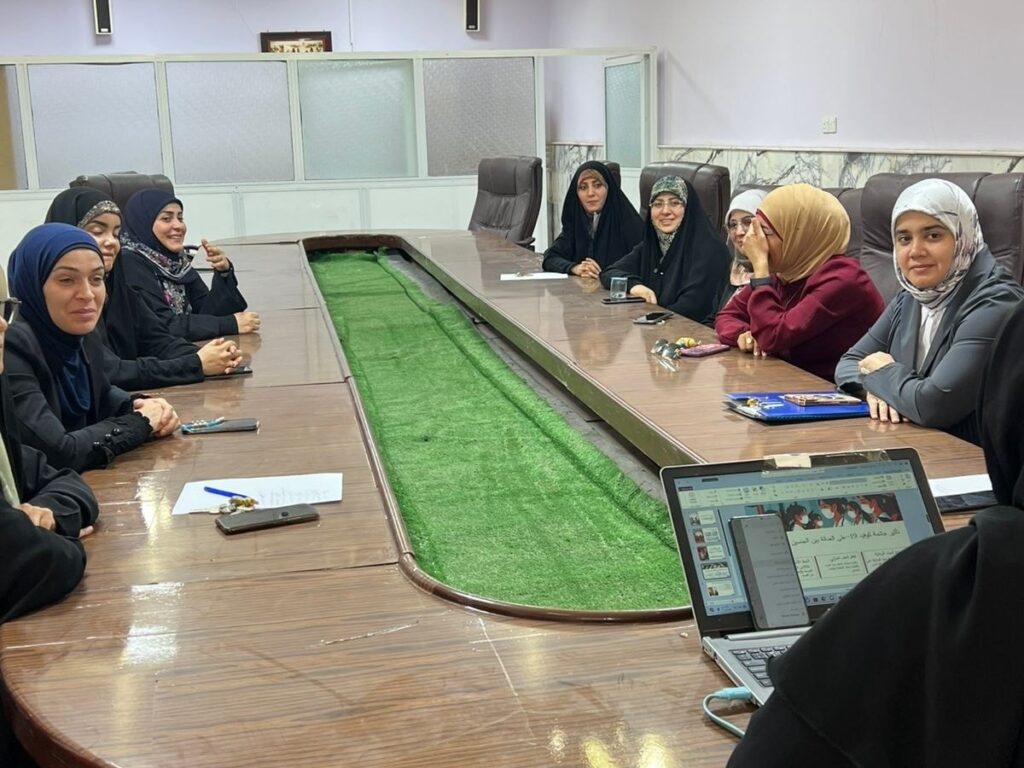
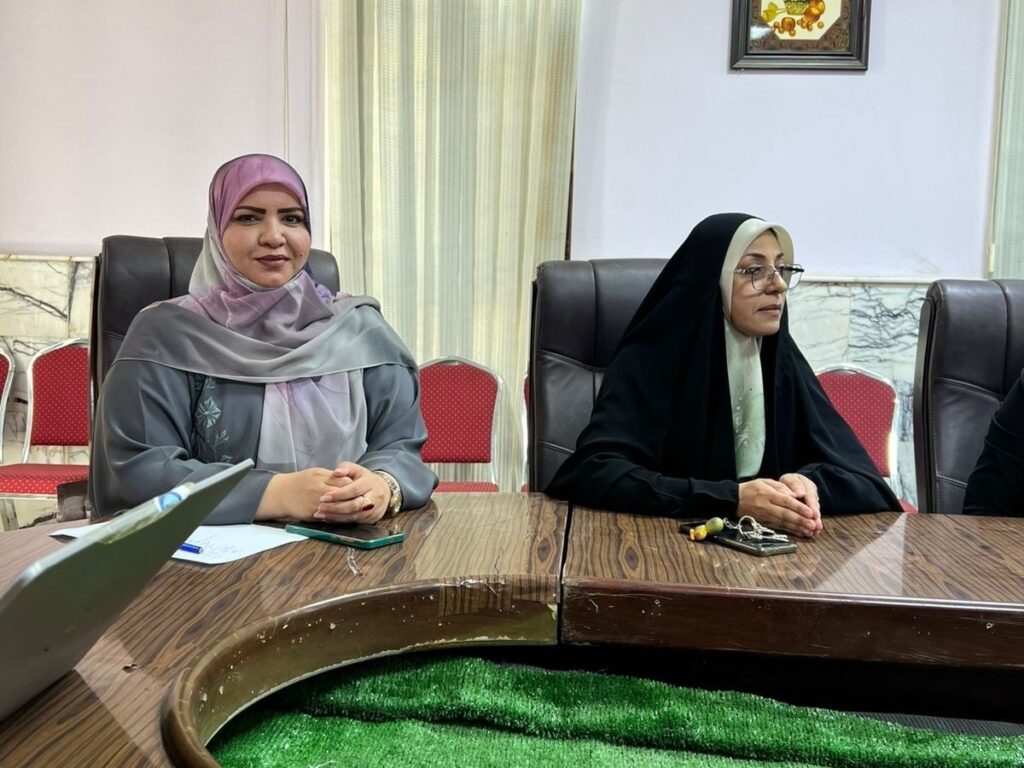
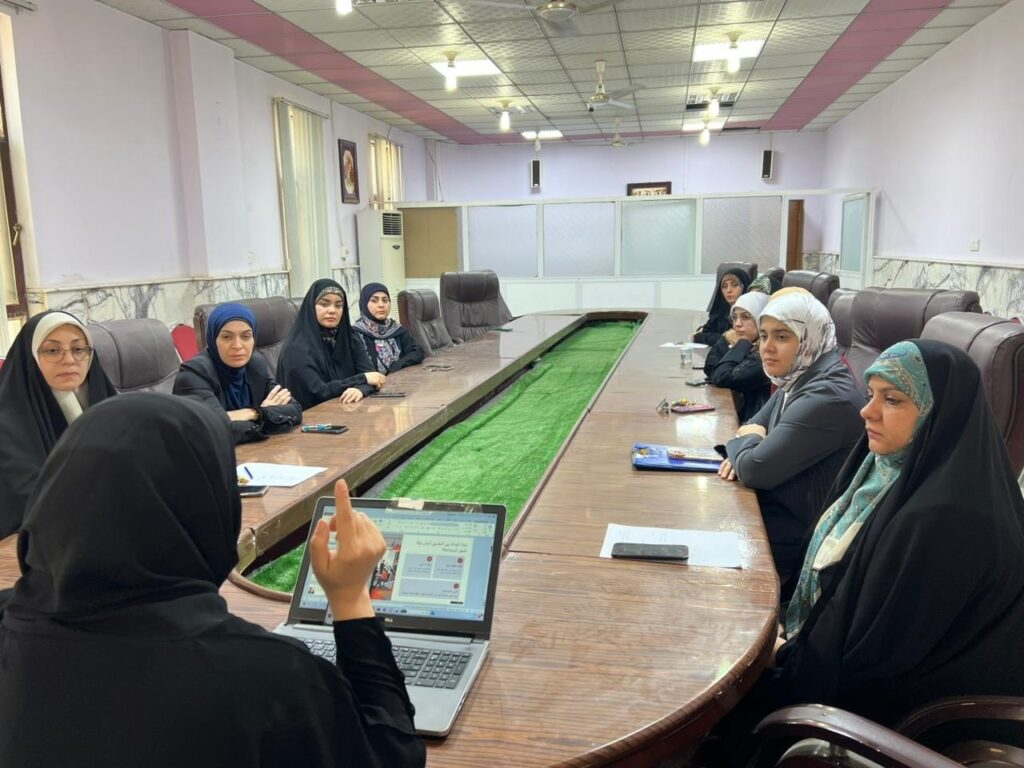
Under the patronage of the Dean of the Technical Administrative College / Kufa, Assistant Professor Dr. Dhirgham Hassan Al-Abdali, the Women’s Affairs Unit organized a scientific seminar entitled “Providing a Sustainable Work Environment: Supporting Gender Justice Standards.”
The lecture was delivered by Assistant Lecturer Anwar Hamza Hassan from the Department of Information Management Technologies on Tuesday, September 16, 2025.
This activity falls within the framework of the fifth provision: “Organizing seminars, workshops, and lectures that promote a healthy work environment that achieves gender justice standards” under the pillar of Participation and Institutional Reform. Under the
The seminar discussed the importance of providing a sustainable work environment that guarantees gender justice, through reviewing the challenges institutions face in achieving equality and presenting practical strategies to enhance fairness and inclusion in the workplace.
It focused on the following key points: Under the
Gender justice is a fundamental right that guarantees human dignity and equality in opportunities and responsibilities. Under the
Equality is a necessity, not an option, as it is the foundation for achieving inclusive and sustainable development. Under the
Justice is an economic force: the participation of both men and women increases productivity and boosts economic growth. Under the
Impact of the COVID-19 pandemic: it deepened the gender gap due to increased family burdens on women and the decline of job opportunities available to them. Under the
Flexible policies (such as flexible working hours and remote work) contribute to justice by enabling employees to balance work and family life. Under the
Childcare support through nurseries or paid leave for both mothers and fathers is a key step towards achieving a fair and sustainable work environment. Under the
A sustainable environment means an institution that considers social, cultural, and economic dimensions and upholds the principle of equal opportunities. Under the
UN Resolution 1325 highlighted the role of women in building peace and security, representing a political and social dimension that supports equality. Under the
The seminar concluded that justice is not only a human rights demand, but also an economic driver that enhances growth, productivity, and strengthens communities. Every dinar invested in achieving gender justice yields multiple returns for both institutions and the economy.